
Rally was designed with affordability at its core, so my very first lists were created simply by going through the bulk commons and uncommons left over from drafts over the years and pulling out cards that felt fun in this new and wacky world that is Rally.
This list, and all versions since, have abided by two additional rules:
- No token producers (treasure and powerstones exempt) to minimize the number of things I had to carry around with me when introducing the format to new players between rounds of local tournaments.
- Only cards I was comfortable playing without sleeves.
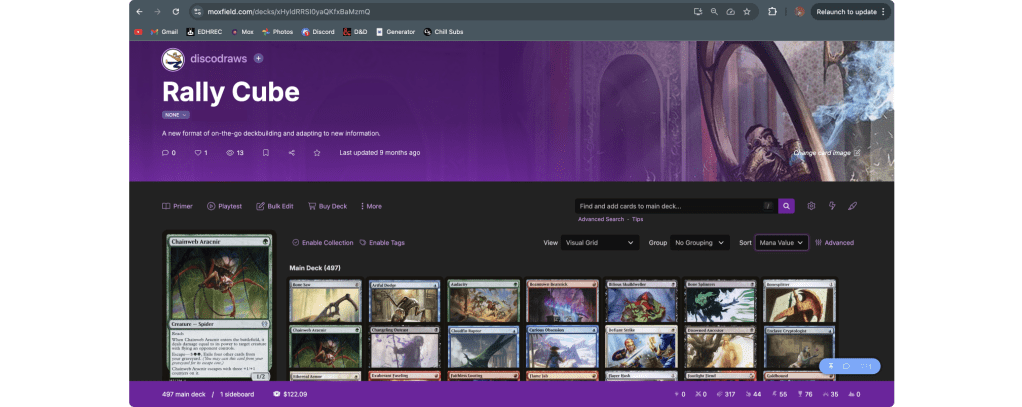
I wasn’t very particular about what cards I did and didn’t include in this first iteration so some cards were horrendously outside of the intended power level. In this article, I’ll detail some of the major lessons learned from the first list. Notably, this list was designed before the rules change to allow casting cards you own from exile, so I’ll be ignoring all self exiling cards in this review.
Activated Abilities
Activated abilities felt great when the cost was 1-mana and absolutely terrible when the cost was more than 2-mana. Single mana activations are a lot easier in a format where you frequently have an awkward amount of mana; cards like Bonesplitter can completely take over a game. Inversely, Golgari Guildmage‘s ability to reanimate a creature for 5-mana felt terrible as the opportunity cost was to lose out on drafting a new 5-drop. I’ve found that 3-mana tends to be the cutoff for when a player is no longer willing to pay for an effect and would rather draft a new card.
Supposedly “Single” Time Effects
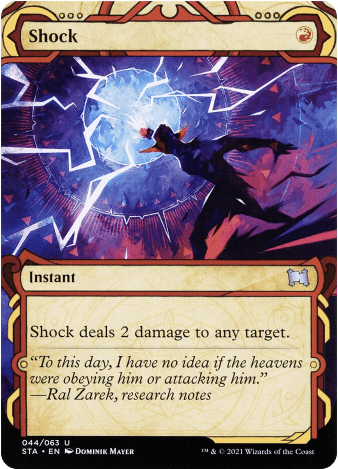
Instants and sorceries are balanced by the game designers for a format where they’re one time effects. Defiant Strike (or any card that cantrips) becomes recurring effects at no cost, meanwhile Scarscale Ritual becomes recurring card advantage so long as you have a creature to shrink. This power is most noticeable if instants/sorceries are drafted in the first few turns as you’ll likely see them more often (I have witnessed a simple Shock spell deal 10 damage to face over the course of a game after being drafted turn 1).
Speaking of creatures to shrink, sacrificing creatures is usually an upside as it allows you to rebuy any enters effects for little cost (e.g., Bone Splinters + Coiling Oracle is a powerful combo)! I did learn to be very careful about choosing creatures with powerful enters effects and low stats because gameplay would slow to a crawl. A player who manages to buy a sweet 6-drop like Enlisted Wurm should feel rewarded instead of punished for attacking into an opponent’s Priest of Ancient Lore. The Priest player is incentivized to chump block the Wurm forever so they can continue to rebuy their enters effects and never allow the Wurm player to rebuy theirs. This is fine if you’re looking for methodical gameplay, but I wanted something a bit faster paced.
Additional Costs vs Alternative Costs
Rally rules state, “You may cast spells from your hand without paying their mana costs” identical to how Omniscience works. This is considered an “alternate cost”
Self Exile
If you’ve ever played deckbuilding games, you’ll be familiar with how powerful reducing your deck size can be. In Rally, you’re generally interested in exiling your own lands from graveyard and rarely do you want to exile nonlands (occasionally advantageous if you need to pivot away from a strategy that your opponent has effectively countered).
I have found self exile effects are most interesting when they have an associated cost each time they’re used rather than a one time cost and then infinite self exile. There was a period of time when Murderous Cut was in the cube and it created some truly degenerate gameplay with very little effort. Instead, I’ve found escape cards like Chainweb Aracnir that require substantial mana to activate or collect evidence cards like Vitu Ghazi Inspector that require exiling some number of nonlands to create more interesting gameplay.
Similar to self exile, card selection with spells like Cathartic Reunion or Consider can functionally reduce the size of your deck even if the total cards remains unchanged.
Cards that Care About Graveyards
Graveyards in Rally fluctuate constantly, which is very different from every other format. Cards that care about graveyard size can be really fun to play, but they do require a lot of mental math or counting each turn when new cards are added and subtracted. It’s up to you if you want to include cards like Wight of Precinct Six or if it’s just too much mental effort.
Treasure and Powerstones
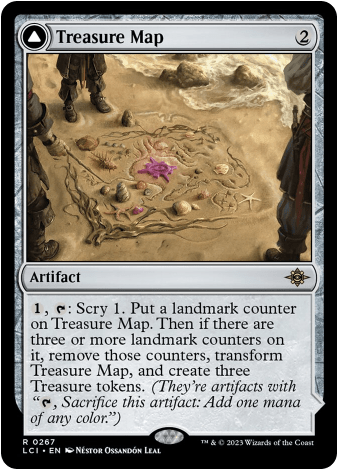
Players enjoy feeling powerful and Rally cubes should include some number of cards that cost 6+ as a kind of “achievement” for building their deck to get more mana in a single turn than is possible at the start of the game. Treasure tokens allow players to stockpile mana to achieve one big buy while powerstones (or other mana rocks) offer recurring mana advantages.
You’ll need to decide how many treasure and powerstone producers to include in your cubes as that will dramatically change how frequently players are drafting from the Low Cube vs the High Cube.
In my experience, 6 mana on a single turn doesn’t happen often but it is possible if you draft for it. On the other hand, 7+ mana on a single turn happens rarely so any 7+ spells should be nearly game winning.
Some Notes on Individual Cards
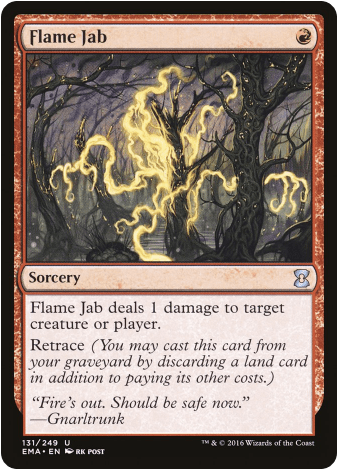
This card (or any card with retrace) initially seems absurdly powerful at first glance because you’re almost guaranteed to have a land in hand each turn. And while it is powerful, the red mana requirement does stop it from being a constant machine gun of damage. Still wildly fun to play, I still highly recommend including it.
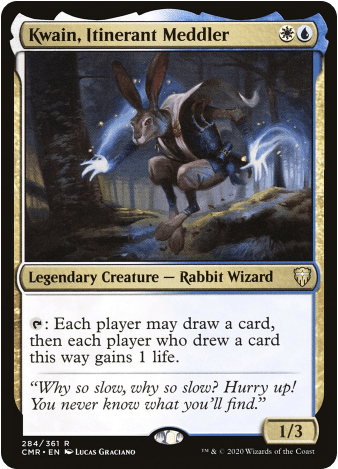
By timing your use of Kwain’s ability to happen when your opponent’s discard/draw/sacrifice trigger is on the stack at the end of their turn, you can effectively negate the card that they draw. However, if they’re clever, they’ll start drafting more instants to get around this.
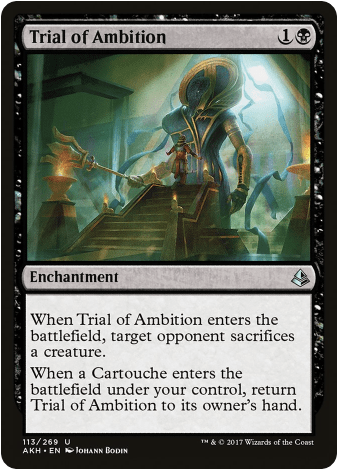
There aren’t many ways to sacrifice/bounce enchantments so this ends up being a one time effect which feels pretty bad in a format designed around recursion.
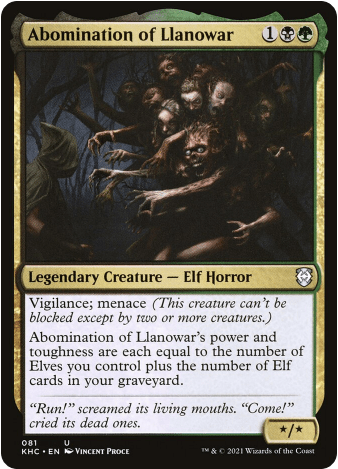
Cards with tribal synergies are really hard to pull off unless you specifically design your cube where one of the main strategies is a tribal one (I’ve often wondered if a slivers theme would be interesting or just confusing). I’d recommend choosing tribal cards that are decent enough on their own like Bramblewood Paragon.
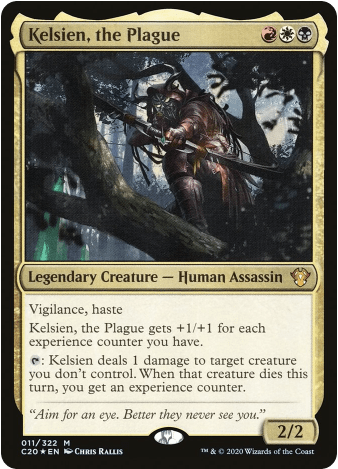
Similar to stockpiling treasures, experience counters are a fun build around that players can opt into.
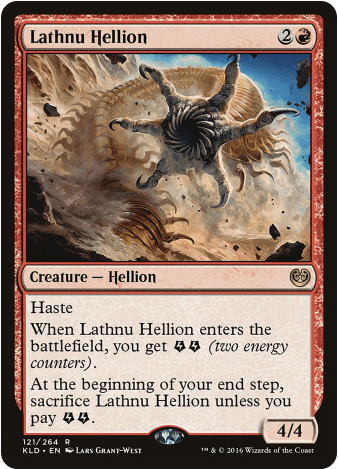
Energy was a really fun strategy in a format about adapting to ever changing resources.
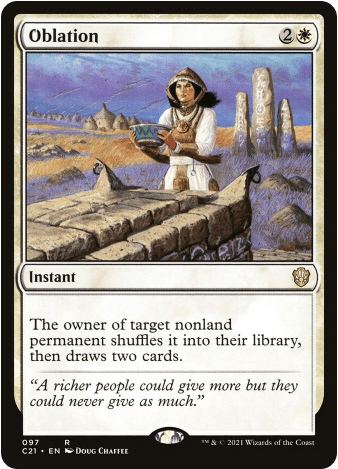
Even when just targeting your own land, this card offers some card selection. But when paired with any enters effects, it becomes truly powerful.
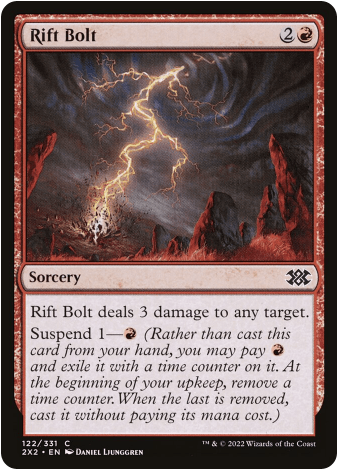
Because you always have to use spells the turn you draw them, sometimes your killspell gets wasted on something irrelevant the turn before your opponent plays a threat. Rift bolt’s ability to suspend a turn has made for some truly incredible plays when players keep track of when their opponents must be drawing their creatures.
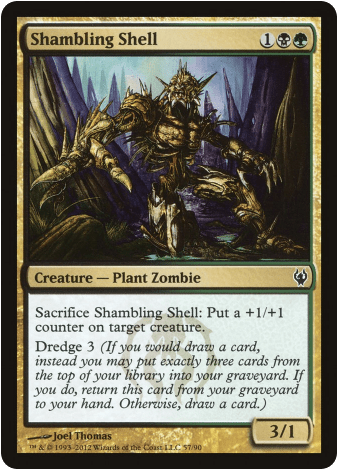
Dredge can speed up the rate at which you see cards in your deck and Shambling Shell’s sacrifice ability means you’re guaranteed to keep dredging each turn until you reshuffle. Or you can elect to take a turn off in order to keep dredging after the reshuffle.

Counterspells are generally bad in a format with transient hands, but modal counterspells can still be fun.
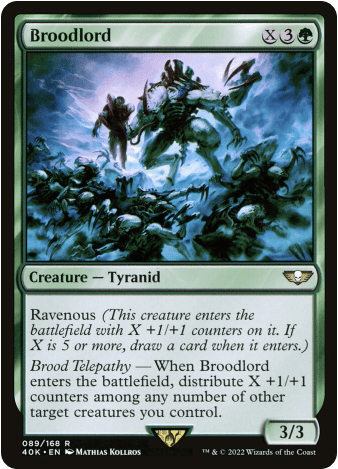
While players can still elect to pay for X spells, they tend to feel bad.

Four mana for three cards as a recurring effect was deemed too strong in my playgroups. Instead, I’ve started using Ancient Craving and Ambition’s Cost to limit the number of uses.
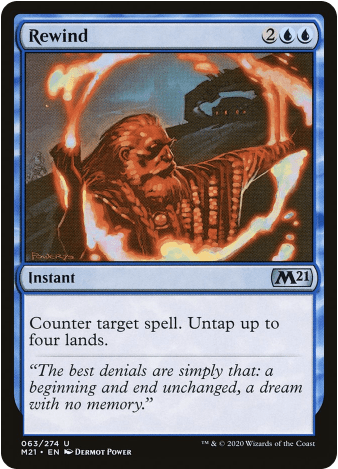
While this can technically work as a ramp spell if you have 3 lands, Rewind, and a spell to counter, it’s difficult to pull this off and its otherwise a bad card.
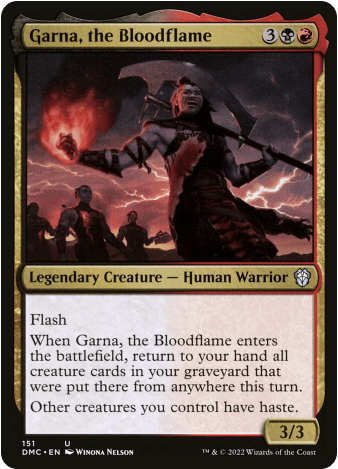
The tempo advantage of being able to draft a creature, immediately put it into play, and attack proved to be absurdly powerful for a 5-mana creature. I may add this back in later if my cubes become more powerful, but it remains one of the best cards in the format.

I’m not sure why, but people just really like this card. I’ve rarely seen people pass up the opportunity to draft it when given the chance.

The ability to reanimate a card from an opponent’s graveyard can be absurdly powerful as it warps their ability to draft large creatures. I’ve taken this out of my cube as it ended up playing more like a weird stax effect than a reanimate one, but it can be fun if you’re interested in that.

Because the discard and draw effect happens all in a single action, the Overbeing won’t die from state based effects. Instead, this creature operates generally as a 6/6 on your turn, a 5/5 on opponents’ turns, and a looter on your upkeep.
 MtG:Rally
Leave a comment